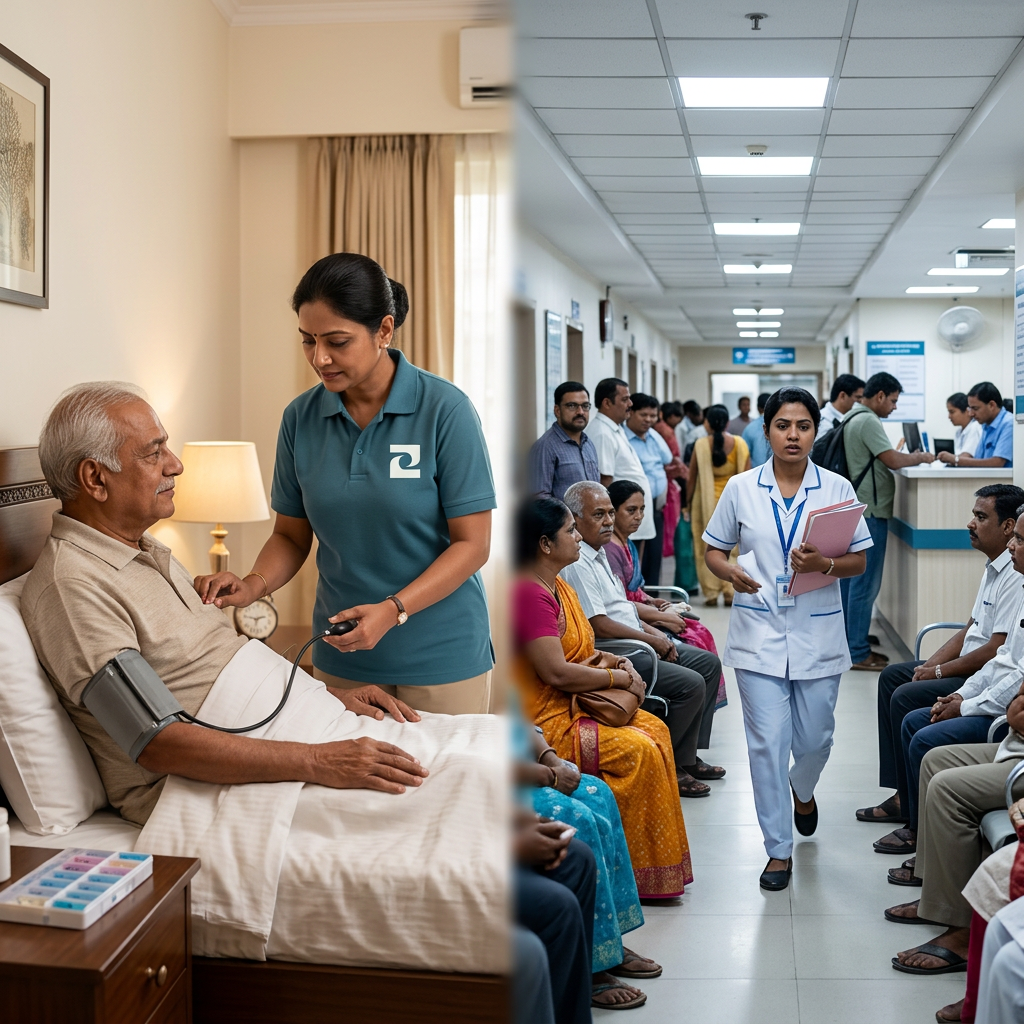
Healthcare in Delhi NCR has evolved rapidly over the past decade. With rising medical costs, increasing patient loads in hospitals, and a growing demand for personalized care, many families are now faced with an important question: Is it more cost-effective to opt for home nursing care or continue with repeated hospital visits?
This decision becomes even more crucial in cases involving elderly care, post-surgery recovery, chronic illness management, or long-term treatment plans. While hospitals provide advanced infrastructure and immediate medical intervention, home nursing offers convenience, comfort, and often significant cost savings.
In this blog, we will explore a detailed cost comparison between home nursing services and repeated hospital visits in Delhi NCR, helping you make an informed and financially sound decision.
Understanding Home Nursing Services
Home nursing refers to professional healthcare services provided in the comfort of a patient’s home. These services are typically delivered by trained nurses, caregivers, or paramedical staff.
Types of Home Nursing Services
Home nursing is not a one-size-fits-all solution. It includes a variety of services tailored to patient needs:
- Basic Nursing Care
Includes vitals monitoring, medication administration, and general assistance. - Post-Surgical Care
Wound dressing, physiotherapy support, and recovery monitoring after surgeries. - Chronic Disease Management
Regular monitoring for conditions like diabetes, hypertension, or respiratory illnesses. - Elderly Care
Assistance with daily activities, mobility support, and companionship. - Specialized Care
ICU-like setup at home, ventilator support, and palliative care.
Benefits of Home Nursing
- Comfort and Familiar Environment
Patients recover faster in a familiar setting surrounded by loved ones. - Reduced Risk of Infections
Hospitals expose patients to cross-infections, which are minimized at home. - Personalized Attention
One-on-one care ensures better monitoring and response. - Convenience for Families
Eliminates the need for frequent travel and waiting times.
Understanding Repeated Hospital Visits
Repeated hospital visits refer to frequent trips to healthcare facilities for consultations, treatments, follow-ups, or procedures.
Common Scenarios for Hospital Visits
- Post-surgery follow-ups
- Chronic illness check-ups
- Emergency situations
- Diagnostic tests and procedures
- Daily or weekly treatments like injections or IV therapy
Challenges of Hospital Visits
- Time-Consuming
Travel, waiting times, and consultations can take hours. - Physical Strain on Patients
Frequent movement can be exhausting, especially for elderly or recovering patients. - Exposure to Infections
Hospitals are high-risk zones for infections. - Hidden Costs
Travel expenses, food, parking, and repeated consultation fees add up quickly.
Cost Structure of Home Nursing in Delhi NCR
Understanding the cost breakdown of home nursing helps in evaluating its affordability.
1. Per Visit Costs
- Basic nurse visit: ₹500 – ₹2,000
- Injection/IV administration: ₹600 – ₹1,200
2. Daily Care Costs
- 8-hour nurse: ₹800 – ₹1,500/day
- 12-hour nurse: ₹1,200 – ₹2,500/day
- 24-hour nurse: ₹2,000 – ₹4,000/day
3. Monthly Packages
- Basic care: ₹25,000 – ₹40,000/month
- Advanced care: ₹40,000 – ₹80,000/month
- ICU-level home care: ₹80,000 – ₹1,20,000+/month
4. Additional Costs
- Medical equipment (oxygen cylinder, hospital bed, etc.)
- Medicines and consumables
- Physiotherapy sessions
Despite these additional costs, home nursing remains relatively predictable and manageable compared to hospital expenses.
Cost Structure of Hospital Visits in Delhi NCR
Hospital expenses are more complex and often unpredictable.
1. Consultation Fees
- General physician: ₹500 – ₹1,500
- Specialist: ₹1,500 – ₹3,000
2. Diagnostic Tests
- Blood tests: ₹500 – ₹5,000
- Imaging (X-ray, MRI, CT scan): ₹1,000 – ₹25,000
3. Daily Hospital Charges
- General ward: ₹5,000 – ₹15,000/day
- Private room: ₹8,000 – ₹25,000/day
- ICU: ₹10,000 – ₹50,000+/day
4. Additional Expenses
- Medicines and procedures
- Nursing charges
- Emergency fees
- Ambulance services
- Travel and accommodation for family members
These costs can escalate quickly, especially in long-term treatment scenarios.
Initial Cost Comparison
At first glance, hospital care may seem necessary for quality treatment. However, when comparing ongoing expenses, a clear difference emerges.
Example Scenario: 15 Days of Care
Hospital Stay (Private Room):
- Room charges: ₹10,000/day × 15 = ₹1,50,000
- Doctor visits, tests, medicines: ₹50,000 – ₹1,00,000
- Total: ₹2,00,000 – ₹2,50,000
Home Nursing Care:
- 24-hour nurse: ₹3,000/day × 15 = ₹45,000
- Medicines and equipment: ₹20,000 – ₹40,000
- Total: ₹65,000 – ₹85,000
Savings: Nearly 60–70%
Quality of Care: A Cost Perspective
Cost is important, but quality of care also plays a role in long-term expenses.
Home Nursing
- Personalized attention reduces complications
- Faster recovery lowers overall treatment duration
- Emotional well-being improves healing
Hospital Visits
- Access to advanced equipment
- Immediate emergency care
- However, overcrowding may reduce personal attention
Indirect Costs Often Overlooked
Many families underestimate indirect expenses associated with hospital visits:
- Transportation (cabs, fuel)
- Lost workdays for caregivers
- Food and accommodation
- Mental stress and fatigue
Home nursing significantly reduces these hidden costs, making it more economical in the long run.
Long-Term Cost Comparison
When healthcare needs extend beyond a few days or weeks, the cost difference between home nursing and hospital visits becomes even more significant.
1-Month Care Comparison
Hospital-Based Care (Moderate Condition)
- Room charges (₹10,000/day): ₹3,00,000
- Doctor consultations & monitoring: ₹50,000 – ₹1,00,000
- Tests, medicines, procedures: ₹1,00,000 – ₹2,00,000
- Miscellaneous expenses: ₹50,000
Total: ₹5,00,000 – ₹6,50,000
Home Nursing Care
- 24-hour nurse (₹3,000/day): ₹90,000
- Medical equipment & medicines: ₹30,000 – ₹60,000
- Occasional doctor visits: ₹10,000 – ₹20,000
Total: ₹1,30,000 – ₹1,70,000
Key Insight
Over a month, home nursing can reduce costs by up to 70–75% compared to hospital-based care.
For families managing long-term illnesses, this difference is not just significant—it can be life-changing financially.
Real-Life Scenarios
Let’s break this down with practical, relatable situations.
Scenario 1: Elderly Care
An elderly patient requires:
- Daily monitoring
- Medication management
- Assistance with mobility
Hospital Approach
- Frequent OPD visits (2–3 times/week)
- Repeated tests and consultations
- Travel and caregiver involvement
Monthly cost: ₹40,000 – ₹80,000 (without admission)
Home Nursing Approach
- Full-time caregiver or nurse
- Regular vitals monitoring
- Occasional doctor consultation
Monthly cost: ₹25,000 – ₹50,000
Result: Lower cost + better comfort + less stress
Scenario 2: Post-Surgery Recovery
A patient recovering from surgery needs:
- Wound dressing
- IV medications
- Monitoring
Hospital Stay (10–15 days)
₹2,00,000 – ₹4,00,000
Early Discharge + Home Nursing
₹60,000 – ₹1,20,000
Result: Faster recovery at home + major cost savings
💉 Scenario 3: Chronic Illness (Diabetes, Kidney Disease, etc.)
Requires:
- Regular injections
- Monitoring
- Frequent check-ups
Hospital Visits
- Weekly visits + tests
₹15,000 – ₹30,000/month
Home Care
- Nurse visits at home
₹8,000 – ₹15,000/month
Result: Nearly 50% savings + convenience
When Home Nursing is the Better Choice
Home nursing is ideal in the following situations:
- ✔️ Patient is stable but needs continuous care
- ✔️ Long-term recovery or rehabilitation
- ✔️ Elderly patients needing daily assistance
- ✔️ Chronic illness management
- ✔️ Post-hospital discharge care
It not only reduces costs but also improves the patient’s quality of life.
When Hospital Care is Necessary
Despite the cost advantage of home nursing, hospitals are essential in certain cases:
- ❗ Emergency or critical conditions
- ❗ Surgeries and complex procedures
- ❗ ICU and life-support requirements
- ❗ Advanced diagnostics and immediate interventions
The smartest approach is often a hybrid model:
Hospital for critical care → Home nursing for recovery
Emotional & Psychological Value (Beyond Cost)
While cost comparison is important, emotional well-being also impacts recovery and overall expenses.
Home Nursing Benefits
- Familiar environment reduces anxiety
- Family presence improves morale
- Personalized care builds trust
Hospital Challenges
- Stressful environment
- Limited visiting hours
- Lack of personal attention
Faster emotional recovery often leads to shorter treatment duration, indirectly saving money.
Hidden Financial Advantages of Home Nursing
Home nursing offers savings that are often overlooked:
- No daily travel expenses
- No hospital admission deposits
- Reduced risk of hospital-acquired infections (lower future costs)
- Less income loss for caregivers
Over time, these factors contribute to substantial financial relief.
Final Verdict
When comparing home nursing vs repeated hospital visits in Delhi NCR, the conclusion is clear:
Cost Efficiency
Home nursing is 40–75% more affordable in most non-critical cases.
Comfort & Convenience
Patients heal better in a familiar environment.
Smart Healthcare Strategy
- Use hospitals for critical treatment
- Shift to home nursing for recovery and long-term care
Conclusion
Healthcare decisions are not just medical—they are financial and emotional as well. In a region like Delhi NCR, where medical costs are rising rapidly, choosing the right care model can make a huge difference.
Home nursing is emerging as a practical, cost-effective, and patient-friendly alternative to repeated hospital visits. While hospitals remain indispensable for emergencies and specialized care, home-based healthcare provides a balanced solution for long-term needs.Ultimately, the best choice depends on the patient’s condition, budget, and personal preferences. However, for many families today, home nursing is not just an option—it is the smarter investment in both health and finances.
Leave a Reply